
Working a Photographic Site
You have all experienced it. You have been out looking for the perfect photographic location and suddenly a turn in the road reveals the perfect scene. Lovely light, majestic vista and interesting foreground elements. Oh Yah!. You try to catch your breath and then the practical photographic technician intrudes and you have to try to figure out how best to Work the Site. There is a strong tendency to want to grab everything all at once, but a systematic approach can make a big difference in getting the most from the opportunity. There are many good plans, but, in talks I have given over the last couple of years, I have used at shoot at the Dummerston Covered Bridge to illustrate my approach to working the scene.
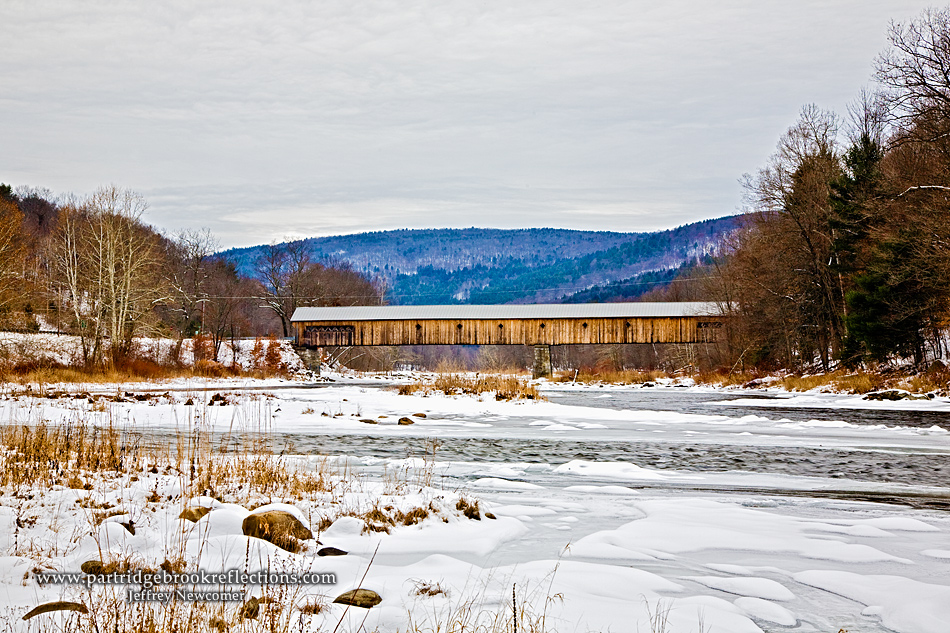 The Dummerston Covered Bridge across the West River River is one of my favorite locations in Southern Vermont. On this day I discovered the bridge appearing fresh and clean after an early winter snow storm. The overcast sky muted the strong contrasts and the water flow provided foreground interest. I was excited to get shooting , but I took a breath and tried to apply a plan.
First Things First
Safety should always be first. I park my car where it wouldn't block traffic. This is especially important when snow plows may be rumbling by. I usually start by catching an iPhone image to record my location and then a quick "shot gun" shot. The shot gun shot is a broad image featuring the whole landscape taken as if I am expecting the land owner to, at any moment, chase me away, gun in hand. Never happened, but you never know and it gives me a broad reference for all my other images.
Zooming With Your Feet
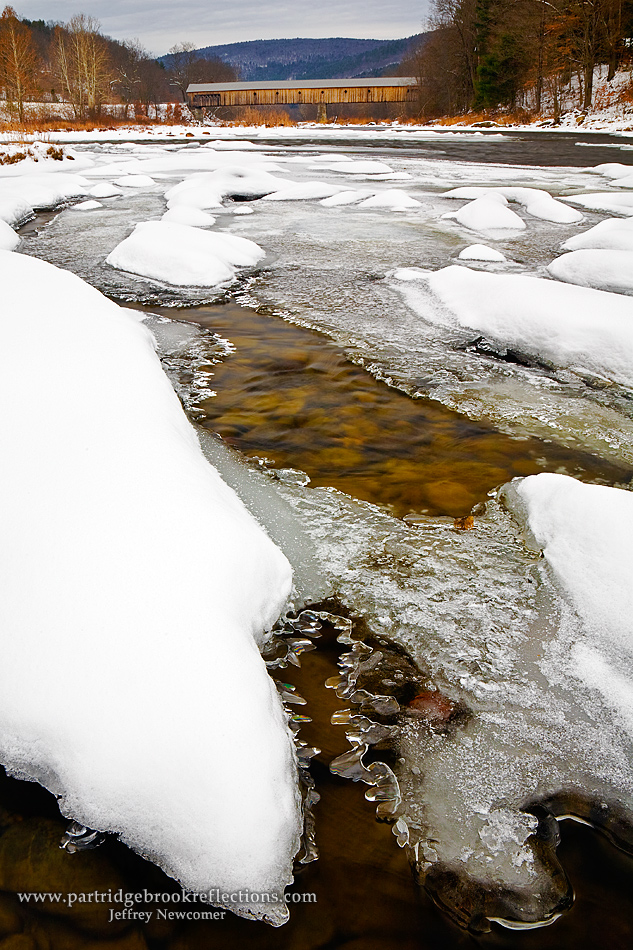 Over the years I have tended to favor the broader compositions, working to find interesting arrangements of the many elements in the scene. A location such as the Dummerston Bridge provides a wide variety of photographic opportunities. I moved around finding angles that would use the sweep of the West River to draw the eye to the bridge while framing the image with the surrounding river banks and trees. Pulling the view down to the river also helped to minimize the dull ninteresting
 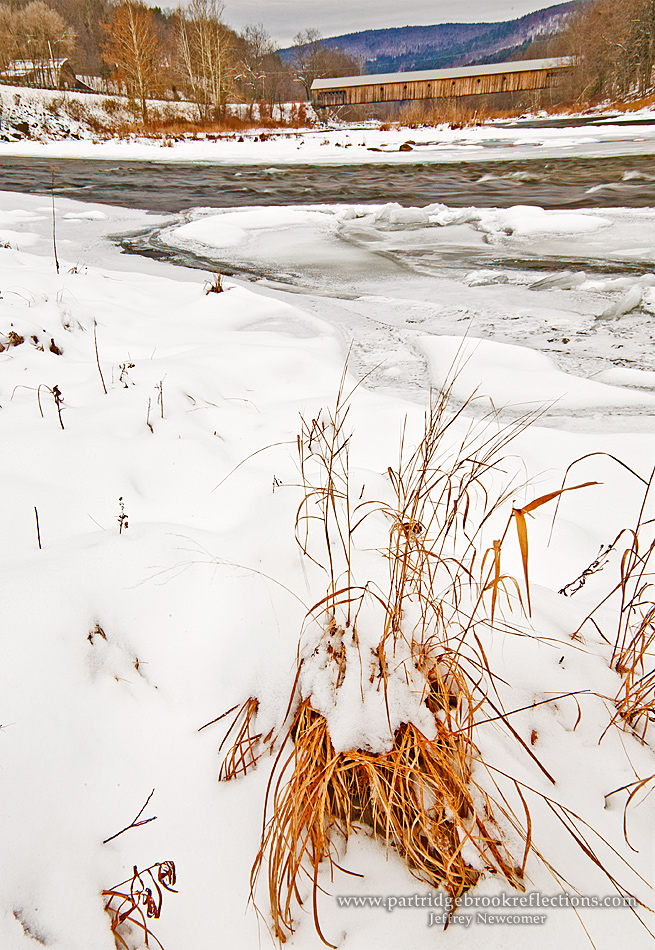 sky. I love playing with the complex interactions of the elements of the scene. It is amazing how just slight movement can change the focus and strength of an image. Sometimes the best viewpoints are obvious from the first glance, but more often a systematic exploration is required. After I've nail the broad "postcard" images, the important thing is not to give up on the location. The real fun starts when I drop kick my eye into full "work the scene" mode and this generally means zooming with my feet.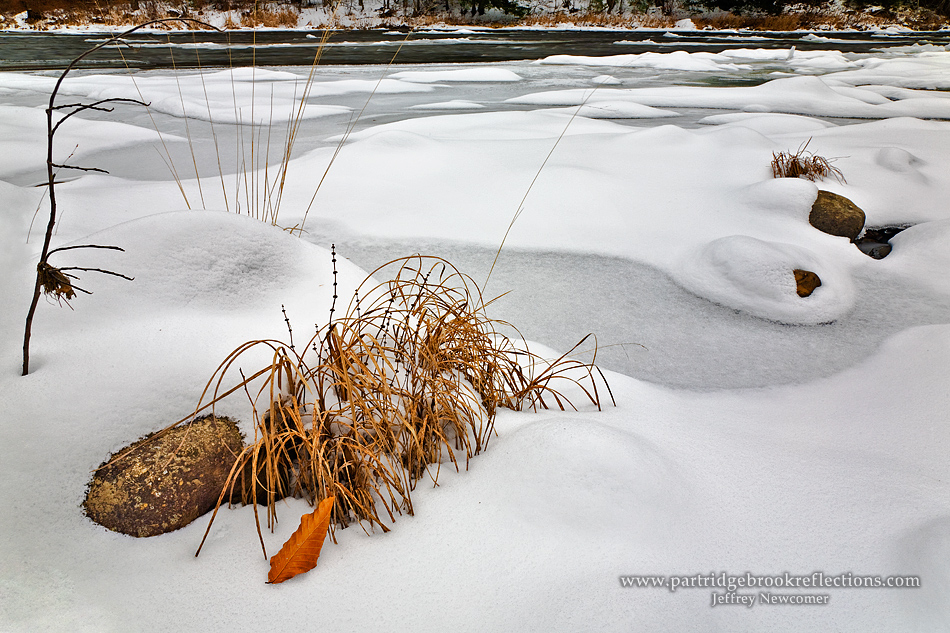
Closer & Closer
I start looking for individual elements that would make  interesting subjects on there own, and I move in. The standard rule is to compose and shoot and then move a little closer, compose and shoot and then move closer still. The only theoretical limit is when the front of the lens bumps into the subject. For me it is like forcing different compositional filters over my eyes to shift my attention from my comfortable and familiar broad views to increasingly close subjects. It takes patience and discipline, but when I go through the exercise, it is amazing how much interest and beauty can be mined from one location.
 interesting subjects on there own, and I move in. The standard rule is to compose and shoot and then move a little closer, compose and shoot and then move closer still. The only theoretical limit is when the front of the lens bumps into the subject. For me it is like forcing different compositional filters over my eyes to shift my attention from my comfortable and familiar broad views to increasingly close subjects. It takes patience and discipline, but when I go through the exercise, it is amazing how much interest and beauty can be mined from one location.
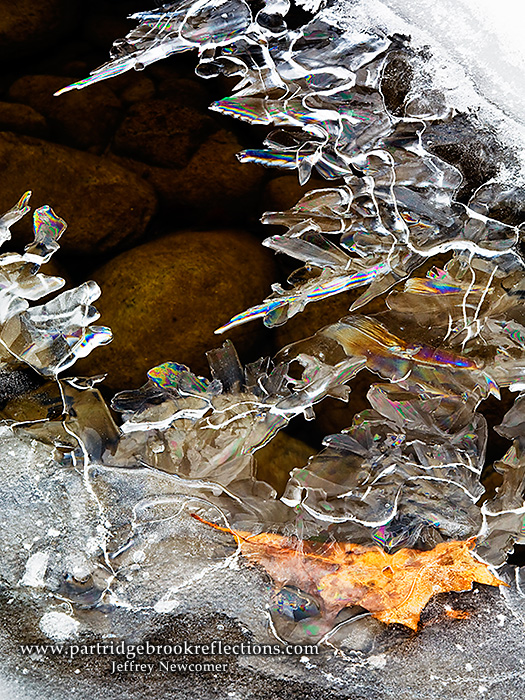
Another time when moving from broad to more intimate compositions is particularly important is when shooting in the snow. As I discussed in my previous "Winter Plan of Attack "article, the key is to avoid tromping all over the pristine white foreground until you have captured all the broader compositions.
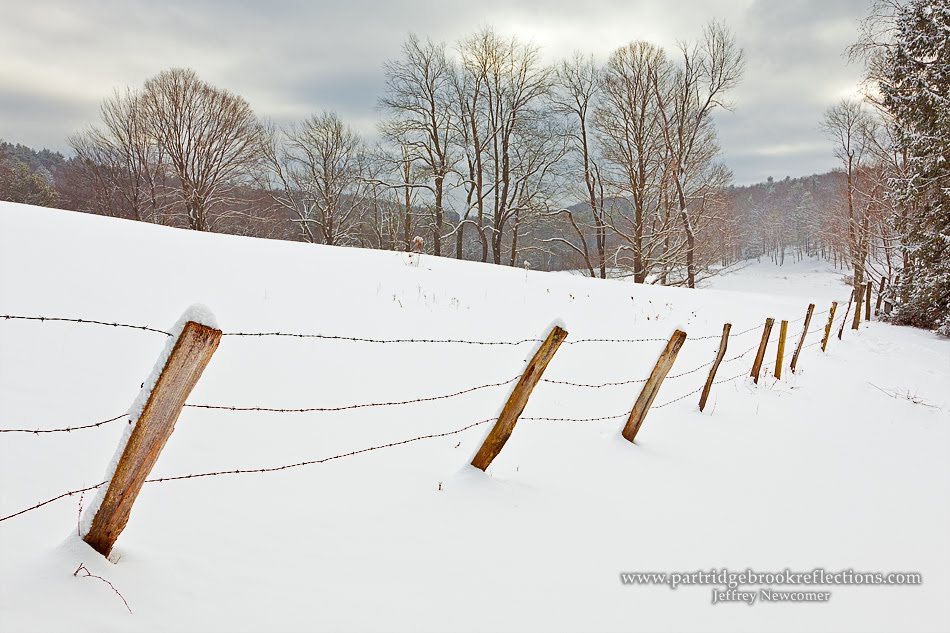 |
| Working the Snow |
So the next time you you stop to capture the perfect majestic landscape move beyond the postcard and work the scene. Turn on that continuously looping recording in your brain that repeats, "closer, closer, CLOSER ....
Comments
No comments posted.
Loading...
© Partridge Brook Reflections : Jeffrey Newcomer